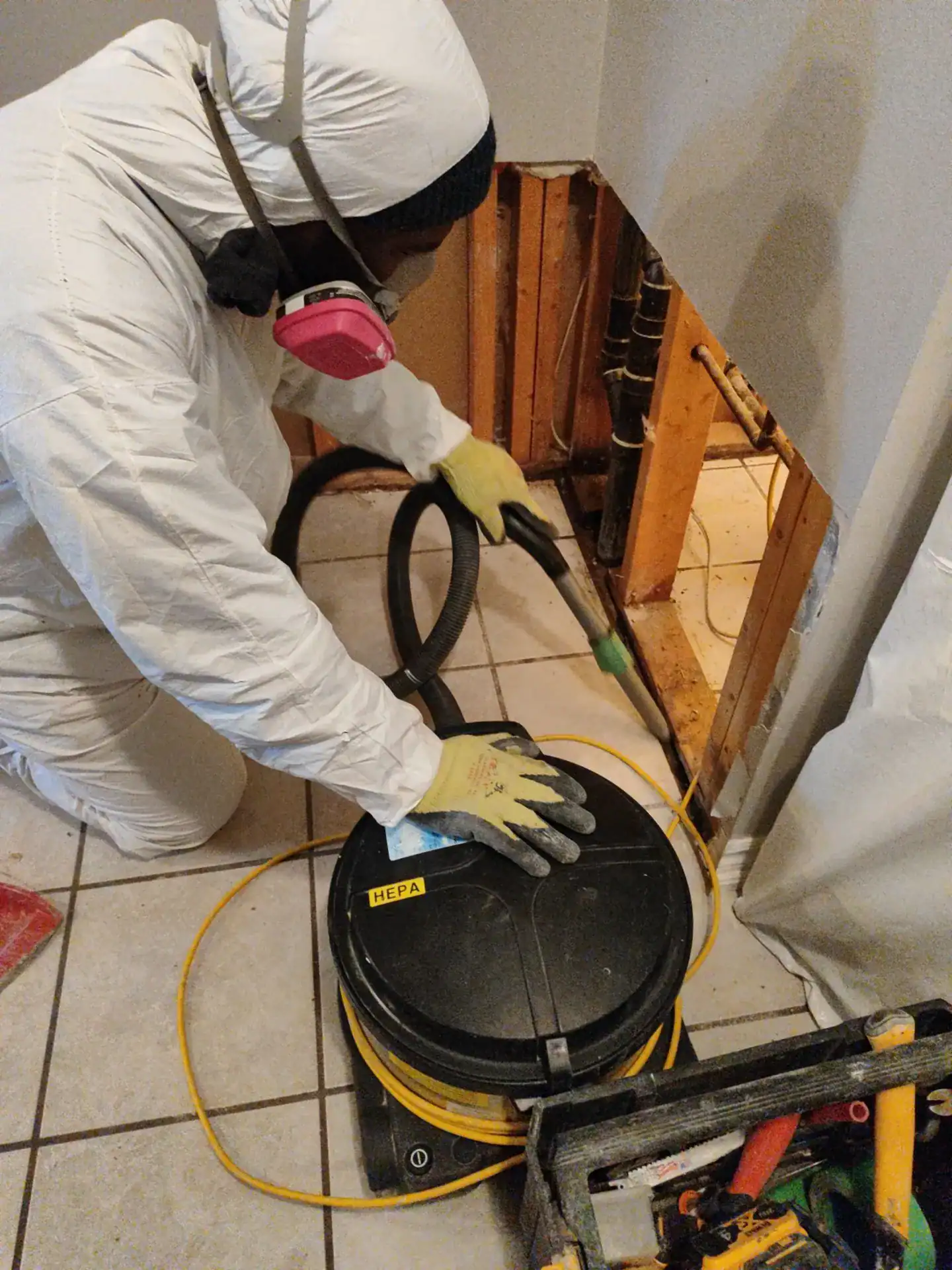
A North York homeowner noticed their kitchen hardwood flooring had begun cupping near the dishwasher and called our team before assuming the floor was a total loss, expecting to need a full replacement.
The Problem
What a Slow Dishwasher Leak Did to This North York Kitchen
The homeowner had noticed the dishwasher taking slightly longer to drain over several weeks but did not connect it to any visible water damage until the hardwood flooring directly in front of the appliance began to cup and darken. A cracked drain hose fitting had been slowly leaking a small amount of water underneath the dishwasher with every cycle, and that moisture had been wicking outward under the surrounding hardwood for close to a month before becoming visible.
- Cupping and discoloration across roughly 40 square feet of hardwood flooring
- Moisture confirmed present in the subfloor beneath the visible damage
- Cabinet base and toe kick near the dishwasher also affected by moisture
- Homeowner initially assumed the flooring would require full replacement
- No mold growth yet present due to relatively early detection
Why It Happened
Why Slow Appliance Leaks Are Easy to Miss in North York Kitchens
Dishwasher leaks are frequently slow and intermittent rather than sudden, since a small crack or loose fitting only releases water during active cycles rather than continuously. This makes them easy to overlook, especially when the appliance is built into cabinetry that hides the base from view. By the time visible signs like cupping or discoloration appear on surrounding flooring, moisture has often already traveled beneath the surface and into the subfloor, which is exactly the situation that calls for professional drying rather than a straightforward flooring repair.
- Cracked drain hose fitting releasing water only during active wash and drain cycles
- Built in cabinetry hid the leak source from casual observation
- Moisture wicked outward under the hardwood before surface symptoms appeared
- Homeowner's own dishwasher maintenance checks had not included the drain fitting
- Early detection meant subfloor saturation was limited compared to a longer term leak
Our Process
How Emergency Flood Services Saved This North York Hardwood Floor
- Moisture Assessment — Our team used moisture meters and an infrared camera to map the full extent of subfloor saturation beneath and beyond the visibly affected flooring.
- Appliance Coordination — We coordinated with a plumber to repair the cracked drain hose fitting before beginning the drying process, preventing any further moisture from entering the space.
- Targeted Floor Drying — Specialized wood floor drying mats were placed directly over the affected hardwood, combining controlled heat and airflow to draw moisture out of the wood without requiring removal.
- Subfloor Drying Verification — Moisture readings were taken daily until both the hardwood and the subfloor beneath it reached a safe, verified baseline.
- Floor Refinishing — Once fully dried, the affected hardwood was refinished to restore its original appearance, avoiding the cost and disruption of a full floor replacement.
Prevention
How to Catch Dishwasher and Appliance Leaks Early in Your North York Home
- Check dishwasher drain hose fittings periodically, even if no leak is visible
- Watch for any change in appliance drain sounds or cycle timing that could indicate a developing issue
- Periodically pull appliances out slightly to inspect the floor and cabinetry behind and beneath them
- Address any cupping, discoloration, or softness in flooring near appliances promptly rather than waiting
- Call a professional for a moisture assessment before assuming flooring damage requires full replacement
Schedule A Free Inspection
Schedule A Free Inspection